





Circadian Rhythm: What It Is, How It Works, and How It Affects Your Energy, Sleep, and Immunity
There's a biological reason why you feel energized at certain times of the day and completely exhausted at others. It's not just a matter of how many hours you slept or how many coffees you drank. Inside your body, an internal clock regulates practically everything: when you feel sleepy, when you have the most energy, when your immune system is most active, and when your hormones are released. This clock is called the circadian rhythm, and when it's out of sync, the consequences affect much more than just your nighttime rest.
If you wake up tired even after enough hours of sleep, if your energy plummets in the mid-afternoon, if you suffer from insomnia, or if you feel that your body isn't functioning with the clarity it should, it's very likely that your circadian rhythm is disrupted. In this article, we'll explain how this system works, what deregulates it, and what you can do to restore it naturally.
What is the circadian rhythm?
The circadian rhythm is an internal biological clock that regulates your body's physiological processes in cycles of approximately 24 hours. The word "circadian" comes from the Latin circa (around) and dies (day), meaning "around a day."
This clock is not a metaphor: it exists physically in your brain, in a structure called the suprachiasmatic nucleus of the hypothalamus. This small group of neurons receives direct information from the retina about the amount of light your eyes perceive and, based on that, sends signals to the rest of your body to coordinate hundreds of biological processes.
Your circadian rhythm regulates the sleep-wake cycle, hormone release (melatonin, cortisol, growth hormone), body temperature, metabolism and digestion, blood pressure, immune function, and cognitive and concentration abilities.
It's not just a simple "sleep clock." It's a master coordination system that synchronizes practically all your body's functions with the natural cycle of light and darkness.
How does the circadian rhythm work throughout the day?
Your body follows a predictable pattern of activity throughout the 24 hours, and understanding it helps you take advantage of peak performance moments and respect recovery periods.
Between 6:00 and 9:00 AM, cortisol (the stress hormone, but also the activation hormone) reaches its natural peak. Your body prepares for activity: body temperature rises, blood pressure increases, and metabolism is activated. This is the time of greatest natural alertness.
Between 9:00 AM and 12:00 PM, your cognitive ability is at its highest. This is the best time for tasks that require concentration, analysis, decision-making, and creative thinking. Your short-term memory functions optimally.
Between 1:00 PM and 3:00 PM, there is a natural dip in energy that has nothing to do with food (although a heavy meal aggravates it). It's a programmed circadian dip that practically everyone experiences. It's not a sign of a problem; it's biology.
Between 3:00 PM and 5:00 PM, your physical coordination and muscular strength reach their peak. This is the best time of day for intense exercise, as the risk of injury is lower and performance is higher.
From 7:00 PM onwards, melatonin, the sleep hormone, begins to be produced. Your body starts preparing for rest: body temperature drops, metabolic activity decreases, and cellular repair processes are activated.
Between 10:00 PM and 2:00 AM is when the most intense phase of deep sleep occurs, during which the body performs the most important repair functions: tissue regeneration, memory consolidation, growth hormone release, and immune system activation.
What happens when the circadian rhythm is disrupted?
When your biological clock loses synchronization with the natural light-dark cycle, the effects cascade. It's not just that you sleep poorly: your entire system becomes uncoordinated.
The most immediate symptom is sleep disorder. Difficulty falling asleep, frequent awakenings during the night, non-restorative sleep (you wake up tired even after 7-8 hours of sleep), and excessive daytime sleepiness.
But the effects go far beyond rest. Chronic fatigue and lack of energy during the day appear because your body is not producing cortisol at the right time. Concentration problems and "brain fog" arise because your brain is not synchronized with its peak performance hours. Weight gain and insulin resistance are exacerbated because metabolism does not follow its normal rhythm. Mood swings, irritability, and a tendency towards anxiety or depression are directly connected to circadian dysregulation. And the immune system weakens, as many of its repair and surveillance functions occur during deep sleep.
Main causes of circadian dysregulation
Understanding what disrupts your circadian rhythm is the first step to correcting it.
Exposure to artificial light at night is, without a doubt, the most widespread cause in the modern world. Phone, tablet, and computer screens emit blue light that your brain interprets as daylight, suppressing melatonin production and preventing you from entering rest mode when you should.
Irregular sleep schedules confuse your internal clock. If one day you go to bed at 11 PM and the next at 2 AM, your suprachiasmatic nucleus cannot establish a stable pattern. Social jet lag (living with one sleep schedule during the week and a very different one on the weekend) has an effect similar to actual jet lag.
Night work or shift work is particularly damaging because it forces the body to function against its biological programming. People who work at night have a higher risk of metabolic, cardiovascular, and immunological disorders.
Chronic stress alters cortisol production, desynchronizing it from the natural circadian pattern. Instead of having a cortisol peak in the morning and a gradual decline until night, people with chronic stress may experience elevated cortisol at night (making it difficult to sleep) and low in the morning (making it difficult to get activated).
Disordered eating also affects it. Eating very late at night, skipping breakfast, or having irregular meal times desynchronizes the "peripheral clocks" that exist in the liver, intestines, and other organs.
How to naturally restore your circadian rhythm
Restoring the circadian rhythm does not require medication or complex treatments. It is based on realigning your body with natural signals of light, darkness, activity, and rest.
Light as the main regulator
Exposing yourself to bright natural light during the first 30-60 minutes of the day is the most powerful signal you can give your biological clock. Go for a walk, have breakfast by a window, or simply spend time outdoors in the morning. This resets your cycle and sets the reference for the rest of the day.
At night, drastically reduce exposure to artificial light, especially blue light from screens, at least 1-2 hours before bed. Use blue light filters on your devices, dim the lights in your home, and, if possible, use warm lights (orange or red tones) from 8 PM onwards.
Consistent schedules
Go to bed and wake up at the same time every day, including weekends. Consistency is more important than the number of hours. Your body benefits more from 7 hours of sleep on a regular schedule than from 9 hours on a chaotic schedule.
Also establish regular meal times. Metabolism has its own circadian clock, and eating at predictable times helps synchronize the peripheral clocks of your digestive organs.
The role of adaptogens in circadian balance
Adaptogens are natural substances that help the body adapt to stress and restore its internal balance, and they have a direct relationship with the circadian rhythm.
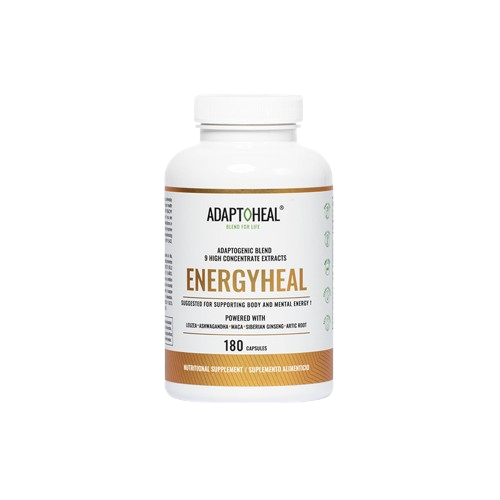
Energyheal by Adaptoheal combines 9 selected adaptogens — Rhodiola Rosea, Maca, Ashwagandha, Siberian Ginseng, Schisandra, Leuzea, Suma, American Ginseng, and Korean White Ginseng — that act on cellular energy production and stress regulation systems.
Rhodiola Rosea improves stress resistance and cellular ATP production without acting as an aggressive stimulant, meaning it boosts daytime energy without interfering with nighttime rest. Ashwagandha helps regulate cortisol levels, promoting this hormone to follow its natural circadian pattern: high in the morning to activate you and low at night to allow you to rest. Schisandra and Siberian Ginseng enhance the body's ability to adapt to daily demands without depleting energy reserves.
It is important to note that taking Energyheal is recommended in the morning with breakfast, precisely to align with the natural circadian rhythm of cortisol.
"I really like it, it helps me with energy and concentration." — Sujeiri, verified Energyheal customer
Discover Energyheal: 9 natural adaptogens for sustained energy without caffeine → adaptohealusa.com
For those whose main problem is difficulty concentrating or "brain fog," Neuroheal by Adaptoheal is specifically formulated to support cognitive function, memory, and mental clarity. Its combination of adaptogens works on the central nervous system, promoting optimal mental performance during peak circadian activity hours.
The connection between the circadian rhythm and the immune system
One of the lesser known but most important functions of the circadian rhythm is its role in immunity. Your immune system does not function at the same intensity 24 hours a day: it has its own cycles of activity and repair synchronized with the biological clock.
During deep sleep (especially between 10:00 PM and 2:00 AM) your body produces cytokines, proteins that regulate the immune and inflammatory response. It is also during sleep that T lymphocytes, essential cells for fighting infections, are activated. This is why chronic lack of sleep is directly associated with a greater susceptibility to colds, flu, and infections.
This also explains why people with irregular sleep schedules or who work at night tend to get sick more often: their immune system does not have the opportunity to perform its surveillance and repair functions at the programmed time.
Diet and circadian rhythm
What you eat and when you eat it has a direct impact on your biological clock. Your digestive system has its own peripheral circadian clocks, and eating in sync with them improves digestion, nutrient absorption, and metabolism.
Have breakfast within the first 2 hours of waking up to activate your metabolism in sync with the morning cortisol peak. Have your last meal at least 2-3 hours before bed to allow digestion to finish before the body enters night repair mode. Avoid heavy meals and excessive sugar at night, as they elevate glucose and insulin at a time when your metabolism is slowing down. Include foods rich in tryptophan at night (banana, turkey, nuts, pumpkin seeds), as this amino acid is a precursor to serotonin and melatonin.
Frequently asked questions about the circadian rhythm
Can I "reset" my circadian rhythm if I've had disordered schedules for months?
Yes. The circadian rhythm is adaptable. With consistency in light, sleep, and meal schedules, most people can re-establish a healthy rhythm in 2-4 weeks. The key is daily regularity, not perfection.
Is it true that drinking coffee in the afternoon affects the circadian rhythm?
Yes. Caffeine has a half-life of 5-7 hours, meaning that a coffee at 3 PM still has half its effect by 8-10 PM. This blocks adenosine receptors (the substance that signals tiredness), delaying melatonin production and disrupting the natural onset of sleep.
Does exercising at night disrupt sleep?
It depends on the intensity. Intense exercise (HIIT, hard runs, heavy weights) within 2-3 hours before sleep can raise body temperature and cortisol levels, making it difficult to fall asleep. However, gentle exercise such as walking, yoga, or stretching can even promote nighttime relaxation.
Are melatonin supplements a good solution?
Melatonin can be useful on an occasional basis (jet lag, shift changes), but it does not address the root cause of the problem. If your circadian rhythm is out of sync, taking melatonin without correcting light, schedule, and eating habits is like putting a band-aid on a wound that needs stitches. Adaptogens, on the other hand, work by helping your body restore its own hormonal and energy balance in a sustained way.
Your circadian rhythm is not a biological luxury: it is your body's operating system. When it works well, you sleep better, have more energy, think more clearly, and your immune system protects you effectively. Restoring it is one of the most profitable investments you can make in your health.
Do you want to regain your natural energy? Discover Energyheal and Neuroheal at adaptohealusa.com