

 UE
UE México




Autoimmunity and Adaptogens: How to Modulate the Immune System Without Suppressing It
Autoimmune diseases have significantly increased in recent decades. Hashimoto's thyroiditis, rheumatoid arthritis, lupus, psoriasis, ulcerative colitis, and other chronic conditions have something in common: the immune system loses its ability to distinguish between "self" and "foreign," activating an inflammatory response that attacks healthy tissues.
Unlike infections or temporary inflammations, autoimmunity is a dysregulated, persistent, and complex state of defense. Traditionally, conventional treatments seek to suppress this activation to prevent damage, but this can weaken the immune system and increase the risk of infections or side effects.
This is where an increasingly studied natural approach comes in: immunomodulation. Instead of suppressing or stimulating, adaptogens help regulate the immune response so that the body regains balance without completely shutting down its defenses.
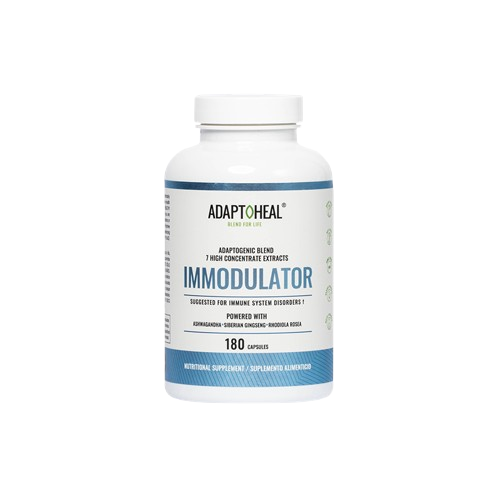
Formulas like Immodulator, available in the AdaptoHeal catalog, combine highly recognized adaptogens—Astragalus, Reishi, Ashwagandha, Siberian Ginseng, Arctic Root, Sutherlandia, Noni—capable of modulating autoimmunity, reducing inflammation, strengthening weakened functions, and balancing immune hyperactivity without suppressing it.
In this article you will learn:
- What autoimmunity is and how it develops
- Why the body "attacks" its own tissues
- The difference between immunosuppression and immunomodulation
- How adaptogens for autoimmunity can help restore balance
- How Immodulator supports specific processes such as Hashimoto's, arthritis, lupus, and colitis
- How to safely integrate it into your routine
This content is designed to help you evaluate natural options from an informed, responsible, and holistic well-being perspective.
What is autoimmunity and why does it occur?
Autoimmunity occurs when the immune system—the body's natural defense—stops correctly recognizing its own tissues and begins to attack them as if they were external invaders. It's as if the body's "radar" fails and activates a prolonged inflammatory response, causing damage to organs, glands, and tissues that should remain protected.
This identification error does not happen overnight. It is a gradual and multifactorial process that involves chronic inflammation, genetic predisposition, sustained stress, and alterations in immune regulation mechanisms.
How autoimmunity develops
Autoimmunity arises when three key factors combine:
1. Genetic predisposition
Some people are born with genes that increase their likelihood of developing autoimmune conditions such as:
- Hashimoto's thyroiditis
- Lupus
- Rheumatoid arthritis
- Psoriasis
- Ulcerative colitis
- Multiple sclerosis
Genetics opens the door, but it is not the only trigger.
2. Environmental and lifestyle factors
These are the "switches" that activate autoimmunity in those with a predisposition. Among them:
- Chronic stress
- Viral or bacterial infections
- Intestinal inflammation
- Environmental toxins
- Hormonal imbalances
- Immune overstimulation
- Sleep deficit
- Emotional trauma
- Inflammatory diet
These factors alter essential immune functions and can lead the defense system to a state of hyperactivity.
3. Immunoregulatory dysfunction
In a healthy immune system, there are mechanisms that:
- Activate defenses when necessary
- Deactivate them when the danger passes
- Regulate the intensity of responses
In autoimmunity, this balance is broken:
- The immune system activates without reason
- It doesn't know when to stop the response
- It becomes reactive to normal stimuli
- It attacks tissues like the thyroid, joints, skin, or intestine
This generates chronic inflammation, tissue damage, and symptoms that worsen over time.
Clear example: Hashimoto's thyroiditis
In Hashimoto's, one of the most common autoimmune disorders:
- The immune system attacks the thyroid gland
- It becomes inflamed and less efficient
- Its hormone production decreases
- Symptoms such as fatigue, constant coldness, weight gain, hair loss, and inflammation appear
This is a perfect example of how autoimmunity affects both metabolism and hormonal balance.
The underlying problem: an immune system that has lost calibration
Every autoimmune disease is, in essence: an immune system that works, but works poorly. It is not weak. It is not strong. It is unbalanced.
And this is where the key concept of the article appears: immunomodulation, not immunosuppression.
Immunosuppression vs. Immunomodulation: Why is the Difference So Important?
When it comes to autoimmune diseases like Hashimoto's, rheumatoid arthritis, ulcerative colitis, lupus, or psoriasis, most conventional treatments aim for immunosuppression. This means "shutting down" the immune system to prevent it from attacking its own tissues. While this approach can control some symptoms and slow down damage, it comes at a significant cost:
- Increased risk of infections
- Weakened immune system
- Slow recovery from viruses or bacteria
- Long-term side effects
- Deterioration of the intestinal barrier and natural defenses
Immunosuppression is necessary in certain specific medical cases, but it is not always the most sustainable solution for people who want to regain balance, immune function, and overall well-being.
This is where the focus of this article—and adaptogens—comes in: immunomodulation.
What is immunomodulation?
Immunomodulation consists of balancing the immune system's response, not blocking it or overstimulating it.
A modulated immune system:
- Responds strongly when truly necessary
- Decreases intensity when there is hyperactivity
- Regains tolerance to its own tissues
- Reduces chronic inflammation
- Maintains balanced defense without exhaustion
In other words: immunomodulation restores the immune system's calibration. It does not leave it defenseless, but prevents it from attacking the body itself.
Why this difference matters in autoimmunity
In autoimmune diseases, the problem is not an "overly strong" immune system, but a poorly calibrated immune system. Therefore, immunosuppression does not always solve the root of the problem.
Immunomodulation, on the other hand:
- Reduces autoimmune hyperactivity
- Decreases inflammation without suppressing defenses
- Improves cellular communication
- Reduces oxidative stress
- Helps regulate the stress axis (HPA)
- Promotes recovery of affected tissue
This approach is especially valuable in conditions such as:
- Hashimoto's thyroiditis
- Lupus
- Rheumatoid arthritis
- Ulcerative colitis
- Crohn's disease
- Psoriasis
- Multiple sclerosis
And it is precisely the raison d'être of immunomodulatory adaptogens.
Where adaptogens come into this process
The adaptogens included in Immodulator, such as:
- Astragalus
- Reishi
- Ashwagandha
- Siberian Ginseng
- Arctic Root
- Sutherlandia
- Noni
have been traditionally used to:
- Calm immune hyperreactivity
- Reduce autoimmune inflammation
- Normalize inflammatory cytokines
- Improve immunological tolerance
- Restore the body's balance
This formula is designed to modulate, not suppress, the immune response, offering more comprehensive and sustainable support for those living with autoimmunity.
How Adaptogens Modulate Autoimmunity Without Suppressing the Immune System
The key to addressing autoimmunity is not to completely shut down the immune system, but to recalibrate it. Adaptogens have the unique ability to act as intelligent regulators: if the system is hyperactive, they calm it; if it is weakened, they strengthen it. However, most importantly, they do not suppress it, which sets them apart from immunosuppressive medications.
AdaptoHeal's Immodulator formula combines adaptogens with immunomodulatory, anti-inflammatory, antioxidant, and stress axis regulating actions, all of which are essential for correcting the root of autoimmunity.
Below, I explain the most important mechanisms.
1. Reduce inflammatory cytokines without affecting natural defense
In autoimmunity, inflammatory cytokines (such as TNF-α, IL-6, IL-1β) are produced in excess and attack self-tissues.
Adaptogens such as:
- Reishi
- Ashwagandha
- Sutherlandia
- Astragalus
help to:
- Reduce these inflammatory markers
- Keep immune responses stable
- Prevent tissue damage
- Regulate inflammation in joints, thyroid, intestines, and skin
This is vital in Hashimoto's, arthritis, and lupus.
2. Regulate the stress axis (HPA), key in autoimmunity
The HPA axis controls cortisol, adrenaline, and the inflammatory response. When this axis is altered:
- Inflammation increases
- Fatigue worsens
- Brain fog sets in
- Autoimmune flares intensify
Adaptogens such as Ashwagandha, Arctic Root (Rhodiola), and Siberian Ginseng, present in Immodulator, help to:
- Normalize cortisol
- Prevent stress spikes that trigger flares
- Improve mental energy
- Reduce anxiety and exhaustion
3. Improve immunological tolerance
Immunological tolerance is the immune system's ability not to attack its own tissues. In autoimmunity, this tolerance is lost.
Adaptogens such as:
- Astragalus
- Noni
- Reishi
- Sutherlandia
support this vital function by helping to ensure that:
- The immune system stops reacting against you
- The ability to distinguish between self and foreign is restored
- Chronic inflammatory flares are reduced
This is particularly beneficial in diseases such as Hashimoto's, Crohn's, and psoriasis.
4. Modulate the activation of lymphocytes and hyperreactive immune cells
In autoimmunity, immune cells such as:
- T lymphocytes
- B lymphocytes
- NK cells
- Macrophages
become hyperactive and attack specific tissues.
Adaptogens in Immodulator such as:
- Ashwagandha
- Astragalus
- Reishi
act on these cells to:
- Reduce their hyperactivity
- Normalize their behavior
- Prevent them from continuing to damage organs and joints
Without blocking their ability to respond to real infections.
5. Decrease chronic systemic inflammation
Autoimmunity does not only affect one organ: it generates global inflammation. The AdaptoHeal catalog highlights that Immodulator improves this response, thanks to adaptogens such as:
- Arctic Root
- Astragalus
- Reishi
- Siberian Ginseng
which:
- Reduce systemic inflammation
- Improve blood flow
- Decrease muscle and joint pain
- Support affected organs
6. Support cell repair and tissue regeneration
By modulating inflammation and oxidative stress, adaptogens allow the body to:
- Repair damaged tissues (e.g., thyroid in Hashimoto's)
- Improve gut integrity (key in autoimmunity)
- Restore affected metabolic functions
- Slow down deterioration
Adaptogens like Noni, Reishi, and Astragalus are especially useful for protecting cells from prolonged autoimmune damage.
7. Offer a comprehensive and sustainable approach
Unlike treatments that only control symptoms, adaptogens:
- Support the root cause
- Regulate multiple systems simultaneously
- Keep defenses intact
- Reduce flares
- Improve quality of life
That is why they are an ideal alternative in the Consideration stage, when the person is evaluating safe natural options to complement their medical treatment.
Key Adaptogens for Autoimmunity (and their Role within Immodulator)
When we talk about adaptogens for autoimmunity, it's not enough to take "any plant for defenses." In the context of autoimmune diseases (such as Hashimoto's thyroiditis, lupus, rheumatoid arthritis, ulcerative colitis, psoriasis, etc.), adaptogens capable of modulating the immune response, reducing inflammation, and regulating the stress axis without leaving the body unprotected are needed.
The Immodulator formula brings together a very specific group of adaptogens selected precisely for their role in natural immunomodulation. Let's look at the most important ones and what they contribute.
1. Astragalus: deep support for immune regulation
Astragalus is one of the most valuable adaptogens in the field of autoimmunity because it:
- Helps regulate the activity of lymphocytes and immune cells.
- Reduces chronic low-grade inflammation.
- Supports tissues affected by autoimmune attacks (thyroid, joints, intestine).
- Strengthens the body's ability to defend itself without triggering exaggerated reactions.
In Immodulator, Astragalus functions as one of the pillars of natural immunomodulation, especially relevant in conditions like Hashimoto's, lupus, and arthritis.
2. Reishi: anti-inflammatory and immunomodulatory adaptogenic mushroom
Reishi is a classic when discussing adaptogens for autoimmunity:
- Modulates pro-inflammatory cytokines (key in flares).
- Decreases systemic inflammation that accompanies autoimmune diseases.
- Supports the balance of the immune system, preventing excessive responses.
- Provides a powerful antioxidant effect that protects cells from continuous damage.
Within Immodulator, Reishi helps to "turn down the volume" of inflammation without completely shutting down the body's defense capability.
3. Ashwagandha: bridge between stress, cortisol, and autoimmunity
Chronic stress and elevated cortisol are frequent triggers of autoimmune flares. Ashwagandha:
- Regulates the stress axis (HPA).
- Helps normalize cortisol, preventing spikes that trigger inflammation.
- Improves rest, reduces anxiety and feelings of exhaustion.
- Indirectly contributes to stabilizing the immune response.
In Hashimoto's thyroiditis, for example, reducing stress and cortisol is key, and Ashwagandha acts as a direct ally in this link between the nervous and immune systems.
4. Siberian Ginseng: resilience, energy, and immunological balance
Siberian Ginseng is not just an "energizing" adaptogen; in the context of autoimmunity:
- Improves the body's ability to manage physical and emotional stress.
- Provides stable energy in cases of autoimmune fatigue.
- Helps normalize the immune response, without overstimulating it.
In Immodulator, its role is to strengthen the body's overall resilience, something that patients with autoimmune diseases need daily.
5. Arctic Root (Rhodiola): key for flares triggered by stress
Rhodiola (Arctic Root) is ideal when autoimmune symptoms worsen with stress:
- Regulates the HPA axis (hypothalamic-pituitary-adrenal).
- Reduces the impact of stress on the immune system.
- Improves mental clarity and reduces the "brain fog" typical of many autoimmune diseases.
Its presence in Immodulator helps break the vicious circle: stress → inflammation → flare → more stress.
6. Sutherlandia: specific support in autoimmune diseases
Sutherlandia is one of the commercially less known adaptogens, but very relevant in immunomodulation:
- Acts on deep inflammatory processes.
- Modulates excessive immune responses.
- Is especially interesting in cases of systemic autoimmunity (like lupus).
In the formula, it reinforces Immodulator's approach to complex autoimmune diseases.
7. Noni: cell repair and comprehensive support
Noni complements the formula by providing:
- Protection against oxidative stress.
- Support for the repair of tissues damaged by inflammation.
- Overall body balance, especially at the cellular level.
In people with years of autoimmune inflammation, this type of adaptogen is key to protecting what is still healthy.
Together: a formula designed to modulate, not suppress
When these adaptogens work together within Immodulator, the goal is not to "turn off" the immune system, but to:
- Reduce the aggressiveness of the autoimmune response.
- Decrease inflammation in the thyroid, joints, intestines, skin, etc.
- Regulate the impact of stress on the immune system.
- Protect and support the repair of damaged tissues.
That is why Immodulator is not a "simple supplement for defenses," but a formula specifically designed to accompany autoimmune processes from a natural immunomodulation approach.
How to Integrate Immodulator into a Self-Care Plan for Autoimmune Diseases
When living with an autoimmune disease, self-care is not optional: it is an essential strategy to reduce flares, modulate inflammation, and improve quality of life. Immodulator is designed to be integrated into this plan as a natural support that regulates—without suppressing—the immune response, thanks to its combination of immunomodulatory adaptogens.
Here is a clear, safe, and structured guide to incorporating it correctly.
1. Initial medical consultation: essential in autoimmunity
Before integrating any immune supplement, even natural ones, it is important to:
- Inform your doctor or endocrinologist.
- Explain that it is an immunomodulator, not an immunostimulant.
- Verify compatibility with immunosuppressant medications, corticosteroids, or biologics.
- Review current thyroid status, inflammatory markers, or autoimmune situation.
The AdaptoHeal catalog itself recommends evaluating the clinical history before using immunological adaptogens in complex autoimmune diseases.
2. Recommended dosage according to the official catalog
Immodulator should be taken from:
✔ 2 to 6 capsules per day
Preferably with food, to promote absorption and avoid possible digestive discomfort.
The recommended schedule according to the stage is:
- Gentle Start (Week 1–2): 2 capsules daily
- Active Modulation (Week 3–8): 4 capsules daily
- Intensive Support (If approved by doctor): 6 capsules daily
This progression allows the body to gradually adapt to the formula.
3. Best way to distribute the dose
To maintain stable modulation throughout the day:
Recommended option:
- 2 capsules in the morning
- 2 capsules at midday or in the afternoon
If 6 capsules are required, divide into three doses: morning — afternoon — evening. Avoid taking it too late if you are sensitive to energetic adaptogens like Rhodiola.
4. Time needed to notice real changes
Autoimmunity is a chronic process, so adaptogens need time to modulate inflammation and immune hyperactivity.
According to the adaptogenic approach:
- First improvements: 2–4 weeks
- Visible immune modulation: 6–12 weeks
- Profound changes: 3–6 months of continuous use
This timeline aligns with what is suggested in the Adaptoheal catalog regarding consistent use to maximize benefits.
5. Can it be combined with medications for autoimmunity?
In most cases, yes. Immodulator does not suppress the immune system, so it can be complemented with:
- Levothyroxine (Hashimoto's)
- Medications for colitis or Crohn's
- Medication for psoriasis
- Anti-inflammatories
- Treatments for arthritis
- Immunological stabilizers
However, if strong immunosuppressants are used, medical supervision is essential.
6. Complementary support to enhance Immodulator
Adaptogens work best when accompanied by a regulated lifestyle. The most important recommendations for those with autoimmunity are:
✔ Regulate stress (the #1 cause of flares)
- Diaphragmatic breathing
- Guided meditation
- Active breaks
- Prioritize emotional rest
✔ Anti-inflammatory nutrition
Include:
- Omega-3
- Turmeric
- Ginger
- Green vegetables
- Red fruits
- Clean proteins
Avoid:
- Gluten (especially in Hashimoto's and celiac disease)
- Ultra-processed foods
- Sugar
- Excessive alcohol
✔ Gut care (key piece in autoimmunity)
- Probiotics
- Prebiotics
- Soluble fiber
- Reduction of irritants
70% of the immune system is in the gut: if the gut is inflamed, autoimmunity worsens.
✔ Deep sleep of 7–9 hours
Sleep regulates inflammatory cytokines and the immune system.
✔ Moderate and regular movement
Not excessive (can trigger flares), not none (aggravates inflammation). Walking, yoga, pilates, gentle mobility.
7. Who should use it with caution or supervision
- People undergoing treatment with strong immunosuppressants
- Pregnant or breastfeeding women
- People with advanced kidney or liver failure
- Transplant patients
- Severe cases of active autoimmunity
In these scenarios, immunomodulation must be carefully supervised.
Conclusion: Autoimmunity Needs Balance, Not Suppression — and Adaptogens Can Help You Restore It
We live in a time where autoimmune diseases are increasingly common: Hashimoto's thyroiditis, lupus, rheumatoid arthritis, psoriasis, ulcerative colitis, and many other conditions are closely related to chronic inflammation, sustained stress, and a dysregulated immune response. In this scenario, many people believe that the only option is to completely shut down the immune system. But there is another path that is smarter, more balanced, and more sustainable: immunomodulation.
Immunomodulating adaptogens offer a natural strategy that:
- Reduces autoimmune hyperactivity
- Decreases inflammation without suppressing defenses
- Regulates the stress axis (a major trigger for flares)
- Supports the recovery of damaged tissues
- Restores immune tolerance
- Provides more energy and emotional stability
And among all available options, Immodulator stands out as one of the most complete formulas on the market. Its combination of adaptogens —Astragalus, Reishi, Ashwagandha, Siberian Ginseng, Arctic Root, Sutherlandia, and Noni— is specifically designed to support people with autoimmune diseases from a holistic, safe, and naturally regulating well-being approach.
It does not replace medical treatments, but it can become real support for those seeking balance, reduced flares, less inflammation, and a more functional life.