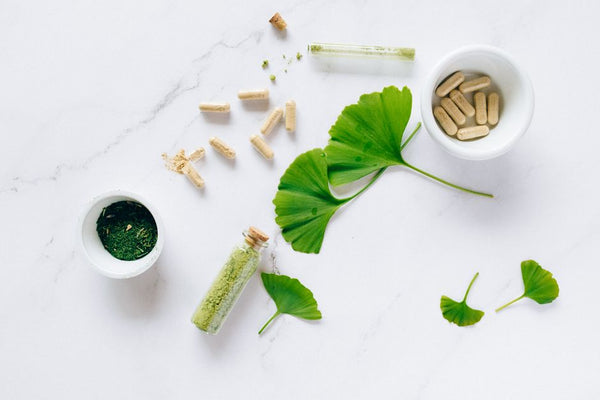
Quick answer: Adaptogens for menopause are medicinal plants that help the body regulate hormonal stress, reduce hot flashes, improve sleep and stabilize mood. They work by modulating the HPA (hypothalamic-pituitary-adrenal) axis without replacing hormones, which makes them a natural, gradual support during this stage.
What makes menopause so challenging hormonally?
Menopause is not just the end of menstruation: it is a deep reorganization of the endocrine system. Estrogen and progesterone levels drop irregularly during the perimenopause years, creating a "hormonal storm" that can last between 4 and 10 years, according to the North American Menopause Society (NAMS).
This translates into symptoms that go far beyond hot flashes:
- Insomnia and waking up at night from sweating
- Anxiety, irritability and brain fog
- Adrenal fatigue from compensatory increases in cortisol
- Lower bone density and changes in metabolism
- Vaginal dryness and lower libido
Understanding this full picture is the first step to choosing an adaptogen that really makes a difference.
How exactly do adaptogens for menopause work?
Adaptogens are plant substances that increase the body's non-specific resistance to physical, chemical and emotional stress. In the context of menopause, their key mechanism is modulating the HPA axis: they normalize cortisol production when it is high (a cause of insomnia and anxiety) and stimulate it when it is low (a cause of chronic fatigue).
"Adaptogens don't act as hormones but as regulators of the stress-response system, which makes them especially valuable during hormonal transitions such as menopause."
— Dr. Alexander Panossian, lead researcher in phytopharmacology, Swedish Herbal Institute
In addition, some adaptogens have weak phytoestrogenic activity (such as maca or red clover), which can partially offset the drop in estrogen without the risks associated with conventional hormone therapy.
Which adaptogens are most studied for menopause?
Not all adaptogens serve the same purpose. This comparison table summarizes the most relevant ones for menopause symptoms:
| Adaptogen | Main benefit | Available evidence |
|---|---|---|
| Ashwagandha | Lowers cortisol, improves sleep and anxiety | Several controlled clinical trials |
| Rhodiola rosea | Fights mental fatigue and adrenal exhaustion | Systematic reviews in Europe |
| Andean maca | Eases hot flashes and supports libido | Pilot studies in perimenopausal women |
| Schisandra | Improves concentration and liver health | Traditional medicine + preliminary studies |
| Eleuthero (Siberian ginseng) | Increases energy and physical stamina | Widely documented in Russian literature |
According to a review published in Phytomedicine (2022), combining adaptogens was more effective than using a single extract, which explains the growing popularity of blended formulas for women's well-being.
How to choose the right adaptogen, step by step
Following an orderly process avoids the most common mistake: buying the first supplement you see on social media without considering your specific symptoms.
Step 1: Identify your main symptoms
Make an honest list of the symptoms that most affect your quality of life. Is your biggest problem insomnia or anxiety? Constant fatigue? Or sudden mood swings? This mapping determines which adaptogen profile you need.
Step 2: Prioritize formulas with multiple extracts
Menopause symptoms rarely come alone. A formula that combines ashwagandha, maca, rhodiola and other extracts tackles the problem from several angles at once. This is especially useful during perimenopause, when symptoms change from week to week.
Step 3: Check the extract concentration
"Root powder" is not the same as "standardized extract." Standardized extracts guarantee a minimum amount of the active compound per dose (for example, 5% withanolides in ashwagandha). Look for products that state these concentrations on the label.
Step 4: Evaluate the dose and cycle of use
Most adaptogens need 4 to 8 weeks of continuous use to show significant benefits. Plan a cycle of at least 3 months before evaluating results. Many wellness protocols recommend taking 1-2 week breaks every 2-3 months.
Step 5: Combine them with habits that enhance the effect
Adaptogens aren't magic on their own. Their effectiveness increases considerably when combined with:
- Quality sleep: 7-8 hours on a regular schedule
- An anti-inflammatory diet: rich in omega-3s, cruciferous vegetables and natural phytoestrogens
- Moderate exercise: yoga, walking or light strength training
- Stress management: meditation, breathing exercises or journaling
When should you see a doctor before taking adaptogens?
Adaptogens are generally safe, but there are situations where medical supervision is essential:
- If you take medication for your thyroid, diabetes or blood thinners
- If you have been diagnosed with a hormone-dependent cancer (breast, uterine, ovarian)
- If perimenopause started before age 40 (premature ovarian insufficiency)
- If your symptoms are severe or affect your daily functioning
In these cases, adaptogens can be an excellent complement to medical treatment, but not a substitute.
How to fit an adaptogen blend into your daily routine
Once you choose your product, consistency is everything. A practical 3-step protocol:
- Morning (with breakfast): take the main dose. Stimulating adaptogens like rhodiola or eleuthero are better tolerated in the morning so they don't interfere with sleep.
- Afternoon (optional): if your product recommends it, a second dose in mid-afternoon can help sustain energy levels.
- Evening (if it contains ashwagandha): ashwagandha has a more relaxing profile and can also be taken in the evening to support rest.
If you're looking for a blend designed specifically for women's hormonal balance, Adaptoheal's HORMOBALANCE 180 Capsules combines 9 natural extracts in a single supplement designed for menopause and perimenopause. If you'd like to start with a shorter cycle, HORMOBALANCE 90 Capsules is an excellent introduction to adaptogens for women's well-being.
For a complete guide on how these specific ingredients ease hot flashes, insomnia and mood swings during menopause, we recommend our complete guide to adaptogens for relieving menopause symptoms, where you'll find detailed information on doses and combinations by symptom.
Recommended products


Frequently asked questions
Do adaptogens for menopause have side effects?
They are generally well tolerated. The most common side effects are mild: stomach upset if taken on an empty stomach, or mild insomnia if stimulating adaptogens (like rhodiola) are taken too late in the day. Starting with low doses and increasing gradually minimizes these effects.
How long do adaptogens for menopause take to work?
The first effects (better sleep, less anxiety) are usually noticeable between weeks 2 and 4 of continuous use. The deeper benefits for hormonal balance and energy build up between months 2 and 3. The key is daily consistency.
Can I take adaptogens alongside hormone replacement therapy (HRT)?
In many cases yes, but you must talk to your doctor. Some adaptogens can modulate the liver enzymes that process synthetic hormones. Your health professional can assess specific interactions based on your treatment.
Do adaptogens for menopause also help during perimenopause?
Yes. In fact, many specialists recommend starting during perimenopause, when symptoms are just beginning, to build a foundation of hormonal regulation before the drop in estrogen becomes more pronounced.
Is there a difference between taking a single adaptogen and a combined formula?
Yes. Research suggests that combined formulas (blends) produce a greater synergistic effect than a single extract. This is because menopause symptoms are multifactorial, and each adaptogen acts on different pathways of the nervous and endocrine systems.