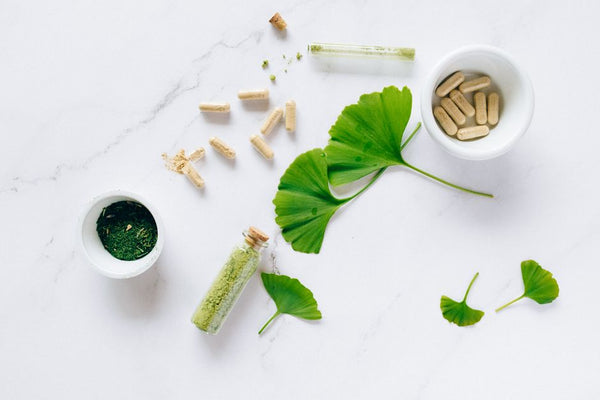
Quick answer: Adaptogens for stress are medicinal plants and mushrooms that help the body regulate its cortisol response, improve energy and restore mental balance. The best supported by science are ashwagandha, rhodiola rosea, ginseng and lion's mane. They come in capsules, tinctures or powders and are ideally taken with professional guidance.
What are adaptogens and why do they help with stress?
An adaptogen is a natural substance —usually from a plant or fungus— that helps the body adapt to physical, mental and emotional stress without disrupting its normal functions. The term was coined in 1947 by Soviet pharmacologist Nikolai Lazarev, and science has since explored how they work in greater depth.
Unlike conventional anti-anxiety medications, adaptogens do not sedate or create dependence. They work by modulating the hypothalamic-pituitary-adrenal (HPA) axis, the system responsible for releasing cortisol when we perceive a threat. By regulating this axis, they reduce the physiological impact of chronic stress on the immune system, sleep and memory.
"Adaptogens are a special class of plants that increase the body's non-specific resistance to stress by normalizing physiological functions." — Dr. Alexander Panossian, researcher at the Swedish Herbal Institute and a global authority on the phytopharmacology of adaptogens.
What are the best adaptogens for stress?
Not all adaptogens work the same way or for the same type of stress. Below are the most studied, with their main benefits:
| Adaptogen | Main benefit | Estimated time to work | Best for |
|---|---|---|---|
| Ashwagandha (KSM-66) | Lowers cortisol by up to 27% | 4–8 weeks | Chronic stress, insomnia, anxiety |
| Rhodiola Rosea | Improves mental energy and concentration | 1–2 weeks | Work fatigue, burnout |
| Panax Ginseng | Boosts vitality and immunity | 2–4 weeks | Physical stress, performance |
| Lion's Mane | Supports cognitive health and mood | 4–8 weeks | Brain fog, emotional stress |
| Schisandra | Protects the liver and regulates the nervous system | 3–6 weeks | Oxidative stress, disrupted digestion |
According to a meta-analysis published in Pharmaceuticals (2021), ashwagandha significantly reduced cortisol levels and perceived stress scores in adults who took it for 60 days, compared with the placebo group. Meanwhile, a Georgia State University study found that rhodiola reduced mental fatigue by 20% in situations of acute stress.
How to start using adaptogens for stress, step by step
Adding adaptogens to your routine is easier than it seems. Follow these steps to do it safely and effectively:
Step 1: Identify your type of stress
Stress is not the same for everyone. Before choosing an adaptogen, ask yourself: is your stress mainly mental (cognitive exhaustion), emotional (anxiety, irritability) or physical (fatigue, muscle aches)? This distinction will help you choose the most suitable adaptogen for you.
Step 2: Choose an adaptogen with a standardized extract
Not all supplements are equal. Look for products that state the percentage of active compounds (for example, "ashwagandha KSM-66 with 5% withanolides"). Standardized extracts guarantee a consistent, predictable concentration in every dose.
Step 3: Start with a low dose and increase it gradually
Most experts recommend starting with half the indicated dose for the first week. This lets the body adjust and reduces the chance of minor gastrointestinal side effects. Then move up to the full dose as tolerated.
Step 4: Be consistent for at least 4 weeks
Adaptogens don't work instantly like caffeine. According to clinical studies, the strongest benefits —especially lower cortisol— are seen between weeks 4 and 8 of continuous use. Consistency is key.
Step 5: Combine them with supporting habits
Adaptogens work best as part of a lifestyle that includes:
- Regular sleep of 7 to 9 hours a night
- Moderate physical activity at least 3 times a week
- Less sugar and alcohol, which raise cortisol
- 10 minutes a day of breathing techniques or meditation
Step 6: Evaluate and adjust
Keep a simple journal where you rate your perceived stress level (from 1 to 10) each week. This will help you spot real improvements and adjust the adaptogen or the dose if needed. If you have pre-existing health conditions, always consult a professional before starting.
Do adaptogens for stress have side effects?
In general, adaptogens are well tolerated by most healthy adults. However, there are a few things to keep in mind:
- Ashwagandha: may cause drowsiness at high doses; not recommended during pregnancy.
- Rhodiola: in very sensitive people, it may cause mild restlessness if taken in the afternoon.
- Panax Ginseng: should not be combined with blood thinners without medical supervision.
- Lion's Mane: may cause reactions in people allergic to mushrooms.
According to the U.S. National Library of Medicine (NIH), most adverse effects reported with adaptogens are mild and temporary, and are associated with excessive doses or interactions with specific medications.
How to choose a quality adaptogen supplement in the U.S.
The U.S. supplement market is regulated by the FDA under the dietary supplement category, which means not all products go through the same quality controls. To choose well, look for:
- Third-party certification: NSF, USP or Informed Sport
- Standardized extracts with a declared concentration
- Formulas without artificial fillers or unnecessary allergens
- A brand that is transparent about where its ingredients come from
- Formulation backed by health professionals
At Adaptoheal, our formulas are designed with concentrated extracts and medical backing, for people looking for real results without compromising their well-being. If you're on the East Coast and want to learn more about our local options, we recommend visiting our page on medically backed natural adaptogens for stress and energy, where you'll find detailed information on availability and specific formulations.
Can you combine several adaptogens at the same time?
Yes. In fact, many modern formulas use adaptogenic stacks, synergistic combinations of two or more adaptogens that enhance each other. For example, the ashwagandha + rhodiola combination is very popular because it pairs the calming effect of the first with the energizing effect of the second, covering both emotional stress and mental fatigue.
The important thing is to start with combinations already formulated by experts, rather than mixing supplements on your own, to avoid overlapping doses or unwanted interactions.
Conclusion
Adding adaptogens for stress to your daily routine is one of the strategies best supported by modern science for improving resilience, hormonal balance and quality of life. The key is to choose the right adaptogen for your type of stress, use quality extracts, be consistent and complement them with good habits.
At Adaptoheal, we are committed to offering you high-concentration natural formulas, developed with medical criteria so you can feel the difference from within. Explore our catalog and take the first step toward more natural, smarter stress management.
Frequently asked questions
How long do adaptogens for stress take to work?
Most adaptogens need 2 to 8 weeks of continuous use to show noticeable effects. Rhodiola can work in 1 to 2 weeks, while ashwagandha usually shows its best results after 4 to 8 weeks of regular use.
Can I take adaptogens if I already take medication for anxiety or stress?
It is essential to talk to your doctor before combining adaptogens with psychoactive medications, antidepressants or anti-anxiety medications, since some adaptogens can interact with how certain drugs are metabolized. Always prioritize professional guidance.
Do adaptogens for stress create dependence?
No. Unlike prescription anti-anxiety medications, adaptogens do not create physical dependence or withdrawal symptoms when you stop taking them. They are safe for extended cycles of use under supervision, although a 4- to 6-week break every 3 months is generally recommended.
Are adaptogens safe for women with hormonal imbalance?
Many adaptogens, such as ashwagandha and schisandra, have a modulating effect on the hormonal axis and can be beneficial for women with chronic stress linked to imbalances. However, some herbs can affect estrogen levels, so it is recommended to consult a health professional before using them during pregnancy or breastfeeding, or if you have a diagnosed hormonal condition.
What is the best time of day to take adaptogens for stress?
It depends on the adaptogen. Ashwagandha is recommended at night or with the last meal of the day, since it can support sleep. Rhodiola, on the other hand, is recommended in the morning or before noon, since it has a more activating effect. Always follow the manufacturer's or your health professional's instructions.